

Do You Need a Prenup for a K-1 Visa Marriage?
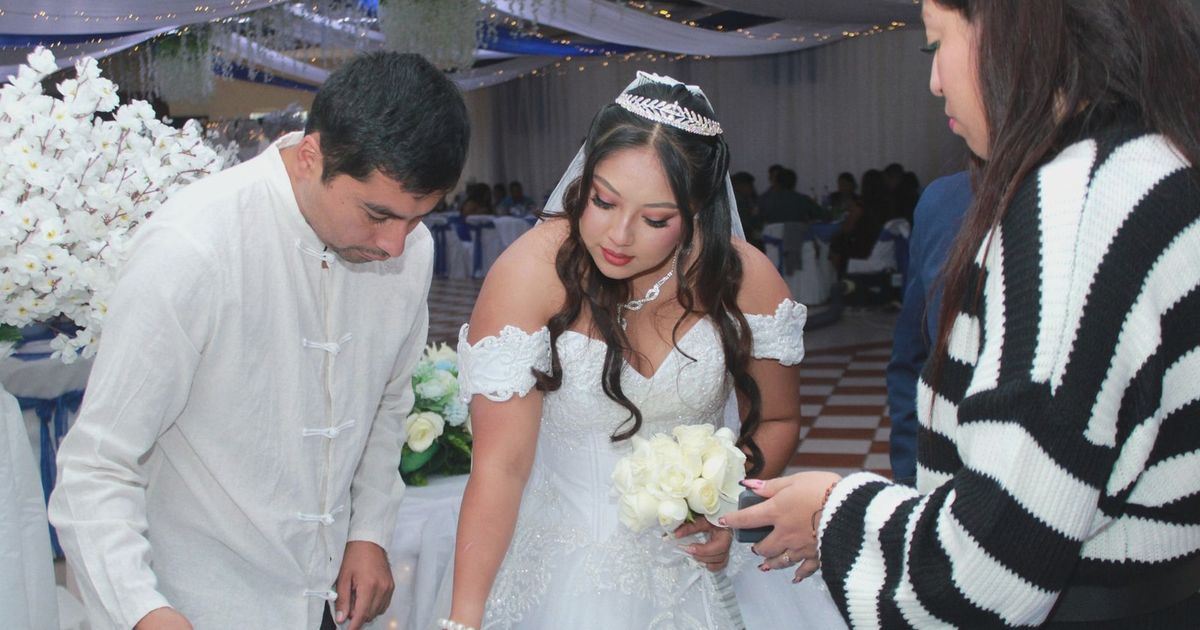
Yes, K-1 fiancé visa couples can absolutely get a prenup, and having one does not hurt your visa application. The real challenge is timing: your fiancé must marry you within 90 days of entering the United States, and the prenup must be signed before the wedding. That compressed timeline, combined with foreign assets, language differences, and a federal support obligation that no prenup can override, makes planning ahead essential. This guide walks through exactly how the 90-day clock, the I-864 Affidavit of Support, foreign asset disclosure, translation, and separate legal representation work for K-1 couples building a prenuptial agreement together.
Key takeaways
- K-1 visa couples can get a prenup, and USCIS does not require you to disclose it during any part of the immigration process.
- The prenup must be signed before the wedding, which must occur within 90 days of the fiancé's U.S. entry under 8 U.S.C. § 1184(d), so starting discussions 6 to 12 months early is recommended.
- The I-864 Affidavit of Support obligation cannot be waived by any prenup. The Ninth Circuit enforced this in Erler v. Erler, 824 F.3d 1173 (9th Cir. 2016).
- Full financial disclosure must cover assets and debts held in both countries, and the agreement should be translated into the non-English-speaking partner's native language to support voluntariness.
- Each partner needs their own independent attorney: the prenup lawyer handles state family law, while immigration filings are separate federal work, and one attorney cannot do both without a conflict of interest.
Can K-1 Visa Couples Get a Prenup?
Yes. Nothing in U.S. immigration law or state family law prevents a K-1 fiancé visa couple from entering into a prenuptial agreement. Having a prenup does not affect visa eligibility, and it will not signal to immigration authorities that your relationship is anything less than genuine.
The core constraint is straightforward: because a prenup must be signed before the wedding, and K-1 visa holders must marry their U.S. citizen partner within 90 days of entering the country, the entire drafting and signing process needs to fit within that window (or, better yet, begin well before it).
USCIS does not ask whether you have a prenuptial agreement. There is no section on the adjustment of status application or any other marriage-based immigration form that requires disclosure. Multiple immigration attorneys have confirmed that a prenup has no bearing on visa processing, and in practice, immigration officials will likely never know about it unless it comes up in conversation during a consular interview, where it can be easily explained.
Why the K-1 90-Day Marriage Clock Changes Prenup Timing
The 90-day marriage requirement under 8 U.S.C. § 1184(d) is the single biggest factor that sets K-1 prenups apart from every other prenuptial agreement. If the marriage doesn't happen within those 90 days, the K-1 holder must leave the United States. There is no extension.
That clock starts the day your fiancé enters the country, not the day the visa is issued. Within those 90 days, you need to draft, review, negotiate, and sign the prenup, then still have the wedding. That's a tight timeline, even for couples who agree on everything.
The practical solution is to start the process long before your fiancé boards the plane. Couples can discuss terms, outline expectations, and even have attorneys prepare initial drafts while the fiancé is still abroad. The signing itself, however, should wait until after your fiancé arrives in the United States. An agreement signed outside U.S. jurisdiction raises enforceability questions because state law governs prenup validity, and a foreign signing location complicates which state's rules apply.
Starting discussions early (ideally before the visa is even approved) accomplishes two things. First, it gives both partners genuine time to consider terms and consult with their own attorneys. Second, it helps avoid a duress challenge later. Courts look at whether both parties had a reasonable opportunity to review the agreement. Presenting a finished prenup for the first time the week of the wedding, when one partner's immigration status depends on the marriage happening, is exactly the kind of pressure that can lead a court to throw out the entire agreement. Some states even set minimum waiting periods between when a prenup is first presented and when it can be signed.
| Timeline Step | When to Do It | Why It Matters |
|---|---|---|
| Begin financial discussions as a couple | 6-12 months before expected U.S. entry | Allows time for honest conversation without pressure |
| Retain separate attorneys | Before the K-1 visa is approved | Both partners have counsel ready when drafting begins |
| Prepare initial drafts | While fiancé is still abroad | Reduces the rush after the 90-day clock starts |
| Fiancé reviews agreement with own attorney in the U.S. | Within first few weeks of U.S. entry | Demonstrates voluntariness and avoids duress claims |
| Both partners sign the prenup | At least several weeks before the wedding | Gives breathing room and shows no last-minute coercion |
| Wedding ceremony | Within 90 days of fiancé's U.S. entry | Satisfies K-1 visa requirement |
The I-864 Affidavit of Support No Prenup Can Waive
The U.S. citizen sponsor's financial support obligation under the I-864 Affidavit of Support (8 U.S.C. § 1183a) is a federal contract between the sponsor and the U.S. government, and no prenuptial agreement can override it.
This is a mandatory requirement. Every immigrant spouse who enters the U.S. on the basis of a fiancé or marriage visa must be financially sponsored by their U.S. citizen partner. The federal government will hold the sponsoring citizen responsible regardless of what a prenup says, and it has the power to demand reimbursement through wage garnishment, frozen bank accounts, or IRS refund claims.
The Ninth Circuit confirmed this directly in Erler v. Erler, 824 F.3d 1173 (9th Cir. 2016), enforcing the I-864 obligation over a prenuptial agreement that attempted to waive it. The I-864 obligation generally lasts until the sponsored spouse becomes a U.S. citizen, works 40 qualifying quarters under Social Security, permanently departs the U.S., or dies.
So what can a K-1 prenup address? It can cover the division of property and debts, spousal support (alimony) terms and limits, treatment of premarital and marital assets, and financial expectations during the marriage. What it cannot do is waive, reduce, or limit the I-864 support obligation. A well-drafted prenup for a K-1 couple should explicitly state that it does not waive any immigration benefits or the sponsor's support obligation. Including that language removes ambiguity and helps both partners understand the boundaries of the agreement.
Foreign Assets, Disclosure, and Language Requirements
Full and fair financial disclosure is a baseline requirement for any enforceable prenup, and for K-1 couples, that means disclosing assets and debts held in both countries. Concealing a bank account or undervaluing property is one of the fastest ways to get an entire agreement invalidated by a court.
Foreign assets present practical challenges that domestic couples don't face. Property in another country may be subject to different ownership structures, title registration systems, or inheritance rules. Valuation can require currency conversion at a specific date, foreign appraisals, or documentation in a language the reviewing court may not read. Working with an attorney who understands cross-border disclosure is important here.
Language matters just as much. Both partners must genuinely understand what they're signing. If English isn't your fiancé's native language, the agreement should be translated into their first language. This isn't just a courtesy; it directly supports the voluntariness requirement that courts evaluate when deciding whether a prenup is enforceable. A fiancé who signed a document they couldn't fully read has a strong argument that the agreement wasn't truly voluntary.
When it comes to notarization, many states require or recommend it. If your partner is still abroad during part of the preparation process, notarization can be handled at U.S. embassies or consulates. The final signing, as noted above, should generally happen on U.S. soil.
Why Each Partner Needs a Separate Attorney
Independent legal representation for each partner is one of the most consistent factors courts consider when evaluating a prenup's enforceability. In the K-1 context, it carries even more weight because of the inherent power imbalance: one partner's ability to remain in the country depends on the marriage happening.
A prenup attorney represents only one spouse. The other spouse needs their own, separate attorney. This isn't optional if you want the strongest possible agreement. And there's a second layer for K-1 couples: the attorney drafting or reviewing the prenup cannot also handle the couple's marriage-based immigration filing. That creates a conflict of interest. Prenups fall under state family law, while immigration filings are federal work, and the two roles need to stay separate.
Neptune offers a lawyer-led online prenup where, when both parties use Neptune-network lawyers, each partner has an independent attorney they choose themselves. That structure addresses the separate-representation requirement directly, and the online format can be especially practical for K-1 couples who may be coordinating across time zones and borders during the drafting phase.
For the immigrating fiancé specifically, having their own attorney who explains the agreement, answers questions, and negotiates terms in their interest goes a long way toward demonstrating that the prenup was entered into voluntarily and without coercion.
How to Approach the Prenup as Partners, Not Adversaries
A prenup conversation between K-1 partners isn't about one person imposing terms on the other. It's about two people building a shared financial foundation at the start of their life together, often across cultures, languages, and legal systems.
As Michael C. Cotugno, Esq., Managing Partner of Neptune Legal, puts it: "Understanding a partner's relationship with money, their historical experiences of abundance or scarcity, their anxieties tied to financial stability, or their personal definitions of success, allows for a deeper, more empathetic understanding of them as a whole individual."
That kind of financial openness is especially valuable for K-1 couples, where each partner may come from a very different economic context. A fair and transparent prenup can actually demonstrate goodwill and commitment. It shows that both partners have thought carefully about their financial life together and want to enter the marriage with clarity rather than assumptions.
The practical checklist for K-1 couples looks like this:
- Start early. Begin conversations about financial expectations months before your fiancé's expected U.S. arrival.
- Disclose fully. Gather documentation for all assets and debts in both countries.
- Translate the agreement. If your partner's first language isn't English, have the prenup professionally translated.
- Retain separate attorneys. Each partner should have their own independent counsel, chosen by them.
- Sign before the wedding, on U.S. soil. Leave enough time between signing and the ceremony to show it wasn't rushed.
- Address the I-864 explicitly. The agreement should state that the federal support obligation is not waived.
As Cotugno also notes: "The real work, the true magic, lies in the ongoing practice of conscious partnership each and every day." The prenup is one step in that practice, not the whole of it. It creates a framework, and the relationship you build together fills it in.
Frequently asked questions
Does having a prenup hurt a K-1 fiancé visa application?
No. A prenuptial agreement does not negatively impact a K-1 fiancé visa application. Multiple immigration attorneys have confirmed that prenups have no bearing on visa processing, and USCIS is concerned with eligibility and the absence of fraud, not whether you have a financial agreement with your partner.
Do I have to tell USCIS about my prenup?
No. There is no section on any marriage-based immigration form that asks about prenuptial agreements, and you are under no obligation to disclose one. If it comes up during a consular interview, you can simply explain the reason it was drafted.
Can I still sponsor a K-1 visa if I have a prenup?
Yes. Having a prenuptial agreement does not prevent you from sponsoring a K-1 fiancé visa. The I-864 Affidavit of Support is a separate federal obligation, and a prenup does not change your eligibility to sponsor your fiancé.
Can a prenup waive the I-864 Affidavit of Support obligation?
No. The I-864 is a federal contract between the sponsor and the U.S. government that cannot be contracted away by a prenup. The Ninth Circuit enforced this in Erler v. Erler, 824 F.3d 1173 (9th Cir. 2016), holding the I-864 obligation over the prenup's terms.
When should a K-1 couple sign the prenup?
The prenup must be signed before the wedding ceremony, which must happen within 90 days of the fiancé's U.S. entry. Ideally, couples begin discussions 6 to 12 months before the fiancé arrives and sign the agreement at least several weeks before the wedding to avoid duress concerns.
Can the prenup be signed while my fiancé is still abroad?
It's best to wait until your fiancé is in the United States to sign. An agreement signed outside U.S. jurisdiction raises enforceability questions because state law governs prenup validity, and a foreign signing location complicates that analysis. You can discuss terms and prepare drafts while your fiancé is abroad, then sign after arrival.
Does the prenup need to be translated for my foreign partner?
If English isn't your fiancé's native language, translating the prenup into their first language is strongly recommended. Courts evaluate whether both parties genuinely understood what they signed, and a translation supports the voluntariness requirement that is central to enforceability.
Does each partner need their own attorney for a K-1 prenup?
Yes. Independent legal representation for each partner is one of the strongest indicators of a fair and enforceable prenup. This is especially important in K-1 situations where one partner's immigration status creates an inherent power imbalance.
Can my immigration attorney also draft my prenup?
Generally no, because it creates a conflict of interest. A prenup attorney represents only one spouse under state family law, while immigration filings are federal work. Even if an immigration attorney is also licensed in the relevant state, they should not handle both the prenup and the immigration case for the same couple.
How do foreign assets get handled in a K-1 prenup?
Foreign assets must be disclosed as part of the full financial disclosure requirement. This can involve foreign appraisals, currency conversion at a specific date, and documentation that may need translation. Working with an attorney experienced in cross-border financial disclosure helps ensure nothing is overlooked and the valuations are accurate.

Written by
Ronke Oyekunle
Co-Founder & COO, Neptune

Reviewed by
Michael Cotugno, Esq.
Managing Partner, Neptune Legal · 30+ years practicing family law
Michael has been practicing family law for more than 30 years and as Managing Partner of Neptune Legal, he is widely recognized for his expertise in premarital agreements and estate plans. After spending the first two decades of his career handling family law litigation, he saw firsthand the emotional and financial costs couples often face when issues are not clearly addressed early on. This experience led him to focus his practice on helping clients proactively create thoughtful, well-structured agreements.