

Template vs Lawyer-Drafted Prenup in Florida and What Templates Miss
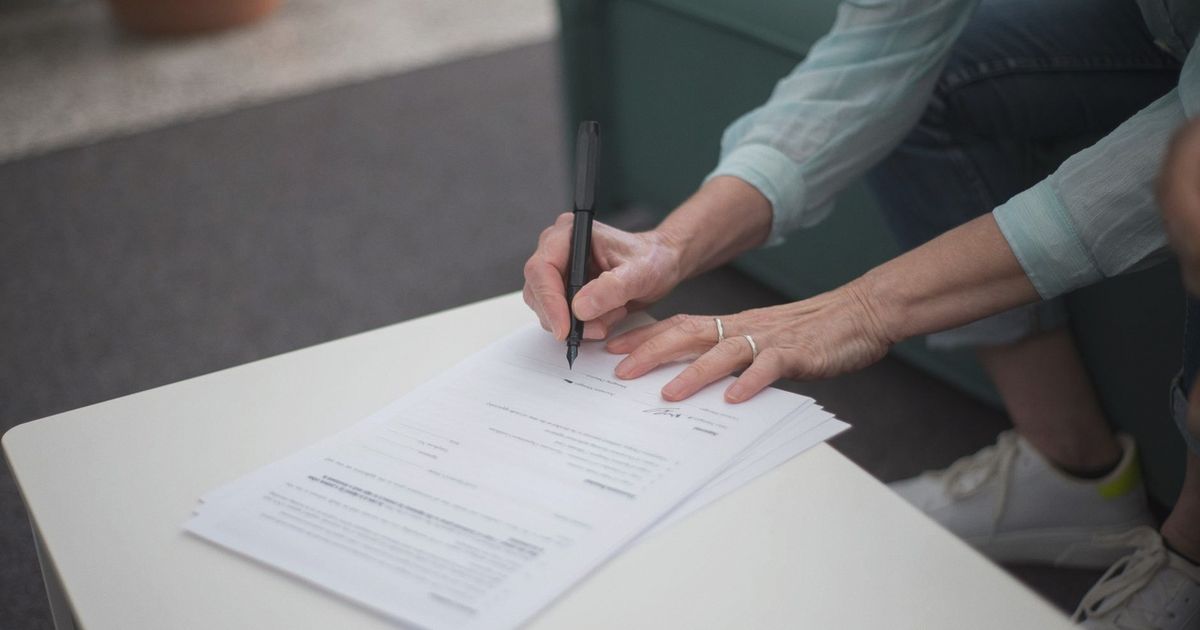
Yes, a template prenup is valid in Florida. Under Fla. Stat. 61.079(3), any premarital agreement that is in writing and signed by both of you counts, and it takes effect when you marry. Whether it holds up later depends on voluntariness, financial disclosure and Florida-specific terms such as alimony, homestead and estate waivers, and a blank template doesn't address those for your situation. A template can fit couples with modest, similar finances. A lawyer-drafted agreement fits couples with a business, real estate, an expected inheritance or a large income gap. Either way, it's a decision you make together about how your finances will work in your partnership.
Key takeaways
- Florida requires only a written agreement signed by both partners. The marriage itself is the consideration under 61.079(3), and the agreement takes effect at marriage under 61.079(5).
- No notary, witnesses or lawyer is required for an ordinary Florida prenup. Waivers of surviving-spouse rights such as the elective share or homestead need two subscribing witnesses under 732.702.
- A court won't enforce a prenup if the challenging partner proves one of three grounds in 61.079(7)(a), including involuntary signing. Templates give you blanks to fill in but don't build a record of disclosure and review for you.
- A template can fit partners with modest, similar finances, no business and no children from a prior relationship. A lawyer-drafted agreement fits couples with a business, real estate, an expected inheritance, a large income gap or estate plans.
- Independent lawyers are optional in Florida. The Florida Supreme Court called independent advice preferable but not required in Del Vecchio (1962), and Casto (1987) held that competency of counsel is not a ground to vacate an agreement.
- Timing matters even without a statutory minimum. The Florida Bar Journal notes that one or two days before the wedding appears insufficient, while two to three weeks appears to suffice.
Template vs lawyer-drafted prenup in Florida: which one fits your situation
A template can meet Florida's signing rules, and for some couples that is all they need. A lawyer-drafted agreement adds the Florida-specific terms and the disclosure and timing record that a template leaves to you.
| What you're comparing | Florida prenup template | Lawyer-drafted Florida prenup |
|---|---|---|
| Meets 61.079(3) signing rules | It meets them once it is in writing and both of you sign it. | It meets them once it is in writing and both of you sign it. |
| Who drafts and explains the terms | You fill in the blanks yourselves, and no one explains what each clause means for either of you. | Each lawyer drafts or reviews the terms and explains what every clause means for their own client. |
| Financial disclosure schedules | You get blank schedules, and no one checks that they list income as well as assets and debts. | Your lawyers help prepare schedules covering assets, debts and income, and note how each value was measured. |
| 732.702 two-witness execution for estate waivers | Some Florida templates include a witness rider, but you have to know when you need it. | Your lawyers plan the signing so any estate or homestead waiver is signed in front of two witnesses. |
| Express alimony waiver language | A generic clause may not state the waiver clearly enough, and Florida courts will not enforce an ambiguous alimony waiver. | The waiver names each type of alimony you intend to waive or limit. |
| Post-2023 alimony terms | An older or multi-state form may still refer to permanent alimony, which Florida eliminated in 2023. | The terms are written against the current version of 61.08. |
| Business appreciation and commingling | A form may cover a business in one sentence and say nothing about growth or mixed funds. | The terms spell out how growth in a business or premarital asset is treated and what happens when funds are mixed. |
| Independent advice for each partner | Neither of you gets advice unless you each hire a lawyer separately. | Each of you can have your own lawyer, which Florida does not require but which helps show you both understood the terms. |
| Documented review timeline | You have to keep your own record of when drafts were shared and reviewed. | Drafts, revisions and each lawyer's review create a dated record before signing. |
| Who it fits | It suits partners with modest, similar finances, no business and no estate waivers in mind. | It suits couples with a business, real estate, an expected inheritance, a large income gap or estate plans. |
The template's real strength is cost and structure: you get a Florida-specific starting point for very little money. Its limit is that it can't tell you whether your answers are complete or what you're giving up. A lawyer-drafted agreement fills that gap, but it costs more and takes more time. Choose between them based on what you own and what you plan to waive.
Is a DIY prenup valid in Florida? Signing, notary and witness rules
Yes. A DIY or template prenup is valid in Florida when it is written and signed by both partners, and it takes effect when you marry.
The formal rules in Fla. Stat. 61.079 are short. The agreement must be in writing and signed by both of you, and the marriage itself is the only consideration needed. For an ordinary prenup, Florida has no notary requirement, no witness requirement, no filing or recording requirement and no minimum number of days between drafting and signing. No lawyer has to be involved.
There is one exception. If your agreement waives a surviving spouse's elective share, intestate share, homestead, exempt property, family allowance or preference to serve as personal representative, Fla. Stat. 732.702 requires the waiving partner to sign in front of two subscribing witnesses. That rule applies to Florida residents. For a waiver signed before marriage, 732.702(2) says no financial disclosure is required.
Notarizing and dating your signatures isn't required, but it helps show who signed and when.
Validity is different from enforceability. Under 61.079(7)(a), a court won't enforce the agreement if the partner challenging it proves one of three grounds:
- They did not sign voluntarily.
- The agreement came from fraud, duress, coercion or overreaching.
- The agreement was unconscionable when signed, and before signing that partner did not get fair and reasonable disclosure of the other's finances, did not waive further disclosure in writing, and did not have (and could not reasonably have had) adequate knowledge of the other's finances.
The third ground has three parts, and all of them must be true. The burden of proof sits with the partner challenging the agreement, and a judge decides unconscionability as a matter of law.
What a Florida prenup template leaves out
A template gives you structure. It leaves out the Florida-specific choices and the record a court reviews if the agreement is ever challenged.
Estate and homestead waivers
Many couples want their prenup to cover what happens at death as well as divorce. If you waive homestead or elective share rights, the two-witness rule in 732.702 applies to the waiving partner's signature. A template that treats the whole agreement as an ordinary prenup can leave that waiver unwitnessed.
Alimony language
A Florida prenup can establish, change, waive or eliminate spousal support. The waiver has to be clear. The Florida Bar Journal discusses White v. White, where the Second District said it would not let a prenup waive alimony unless the waiver is unambiguously expressed, and a general clause such as "any other right or claim" won't do. The article recommends naming each type of alimony.
The types themselves changed in 2023. SB 1416, effective July 1, 2023, amended 61.08 and eliminated permanent alimony. The forms now available are bridge-the-gap (no more than 2 years), rehabilitative (no more than 5 years) and durational, plus temporary support during the case. A form written before the reform may still refer to permanent alimony.
One backstop survives any waiver. Under 61.079(7)(b), if a waiver would leave a spouse eligible for public assistance at separation or divorce, a court may order support to the extent needed to avoid that.
Terms Florida won't enforce
Some clauses appear in forms but won't bind a Florida court:
- A clause that adversely affects a child's right to support is barred by 61.079(4)(b).
- Custody or timesharing can't be set in advance, since those are decided by the child's best interests at the time.
- Waivers of temporary support and attorney's fees during the divorce itself won't bind the court (Khan v. Khan, 2012, and Parbeen v. Bari, 2022).
Financial disclosure
Florida expects disclosure of income as well as assets and liabilities, and the Florida Bar Journal warns that income is often left out. It recommends attaching the disclosure to the agreement and having both of you initial it. Values don't have to be exact. Reasonable approximations work, and even "value unknown" can be enough, as long as you say what the number reflects (fair market value, book value, tax basis) and the other partner can see the backup. A template may give you a blank schedule, but nothing checks that it is complete.
Business and premarital assets
Florida divides marital property under 61.075 and treats growth in a non-marital asset differently depending on whether marital effort or funds drove it. Consider a business worth $500,000 at the wedding that a template describes as separate property in one sentence, with no disclosure and nothing on appreciation or active versus passive growth. If the business is worth $3 million 15 years later, that one sentence carries a lot of weight. Commingling (mixing premarital money with shared money) raises the same issue for savings and real estate.
Older forms and older agreements
Section 61.079 applies only to agreements signed on or after October 1, 2007. Older agreements are judged under Florida common law, mainly Del Vecchio v. Del Vecchio and Casto v. Casto, so an old form or a parent's old agreement needs a different analysis.
When a prenup template works for Florida couples
A template can be a reasonable choice when both of you have modest, similar finances, no business, no children from a prior relationship and no estate waivers in mind.
The strengths are real. A template costs little, gives you a structured place to start the conversation, and the Florida-specific versions are built around 61.079. One Florida template, reviewed by a Florida probate lawyer, includes disclosure schedules, an optional written waiver of further disclosure, amendment terms and a separate 732.702 rider with a two-witness block. Its own publisher notes that a template may not be enough for business interests, large property transfers, surviving-spouse rights or estate planning.
The limits are also real. No one explains what each clause means for either of you, no one checks whether your schedules are complete, and filling in a form together doesn't create a record of negotiation or independent review.
Some couples take a middle path: they fill out a template together, then each partner has their own lawyer review it. Approached this way, review is something you both do so you each understand what you're agreeing to.
What a lawyer-drafted Florida prenup adds
Each of you has your own lawyer, who asks about your savings, your home, any business and your plans for children, explains every term, and drafts language that fits Florida law.
Independent advice isn't required under 61.079. In Casto v. Casto, the Florida Supreme Court reaffirmed that the competency of counsel is not a ground to vacate a marital agreement, and Del Vecchio called independent advice preferable but not a prerequisite. We strongly suggest that each of you has your own lawyer, because independent advice supports an enforceable prenup. Your own lawyer helps you understand the waivers you're making, and the review itself creates a record that bears on voluntariness and disclosure.
Lawyers also help with disclosure. They prepare schedules covering assets, debts and income, label how each value was measured, and record that each partner had access to the backup documents. That is the record a court looks at under 61.079(7)(a)3.
The limits are cost, time and scheduling. Clio puts the average Florida family law rate at $375 an hour, so 8 hours of work comes to $3,000 for one lawyer, and you each need your own. You also need weeks, not days, before the wedding. No agreement is beyond challenge, and no lawyer can promise a court will uphold one.
Neptune is a lawyer-led online prenup. When both of you use Neptune-network lawyers, each of you chooses your own lawyer, and each lawyer advises only their own client.
Florida prenup timeline for couples planning together
Start the conversation months before the wedding and sign well ahead of the date. Florida sets no minimum, but last-minute signings show up again and again in agreements that courts threw out.
In Hjortaas v. McCabe (1995), the agreement was drafted two days before the wedding and signed the day before, with no financial disclosure attached, and the court held it invalid. In Flaherty v. Flaherty (2013), the husband handed the agreement over at 11:30 p.m. the night before the wedding, and the court found duress and coercion. In Stevens v. Travers (2021), a prenup signed hours before the ceremony was invalidated. In Waton v. Waton (2004), the wife and her lawyer received the agreement two weeks before the wedding, and it was upheld. The Florida Bar Journal says there is no bright line, but one or two days appears insufficient and two to three weeks appears to suffice.
- Talk through your goals together: savings, a home, a business, children, and what you each want for the other.
- Gather financial information for both of you, including income, assets, debts and business interests.
- Choose a template or start drafting with your lawyers.
- Have each draft reviewed independently, with time for questions.
- Revise until you both agree on the terms.
- Sign and date the final version, with two witnesses for any estate or homestead waiver, and keep the schedules attached.
After the wedding, any change must be made by a written agreement signed by both of you (61.079(6)).
Routine money conversations between partners don't need legal advice, but bring in a qualified Florida lawyer if your agreement touches a business, real estate or homestead, estate waivers, alimony, a significant income difference or another country.
"The initial outreach for a premarital agreement is an invitation, not a demand," says Michael C. Cotugno, Esq., Managing Partner, Neptune Legal.
Frequently asked questions
Is there a free prenuptial agreement form or PDF from the Florida courts?
The Florida courts' family law forms page lists forms for court cases such as dissolution of marriage, alimony, parenting plans and marital settlement agreements, and it doesn't list a prenuptial agreement form. The courts note that forms are not available for every situation. Private sites publish free Florida prenup templates built around Fla. Stat. 61.079.
Does a prenup need to be notarized in Florida?
No. Fla. Stat. 61.079(3) requires only a written agreement signed by both partners. Notarizing and dating your signatures isn't required, but it helps document who signed and when.
Does a Florida prenup need witnesses?
An ordinary Florida prenup doesn't need witnesses. If the agreement waives surviving-spouse rights such as the elective share, intestate share, homestead, exempt property or family allowance, Fla. Stat. 732.702 requires the waiving partner to sign in front of two subscribing witnesses.
Do both partners need their own lawyer for a prenup in Florida?
No. Section 61.079 doesn't require a lawyer, and Florida courts have described independent advice as preferable but not a prerequisite. We strongly suggest that each of you has your own lawyer for an enforceable prenup, because it helps each of you understand the waivers and creates a record of voluntary, informed signing.
How far before the wedding should we sign a Florida prenup?
Florida sets no minimum. The Florida Bar Journal notes there is no bright line, but one or two days before the wedding appears insufficient and two to three weeks appears to suffice. Courts invalidated agreements signed the day before or hours before the wedding, so start months ahead and sign well before the date.
Can a Florida prenup waive alimony?
Yes. Section 61.079(4)(a)4 allows you to establish, modify, waive or eliminate spousal support. The waiver must be stated clearly, and naming each type of alimony is recommended. A court may still order support to the extent needed to keep a spouse off public assistance under 61.079(7)(b).
Can a prenup set child support or custody in Florida?
No. Under 61.079(4)(b), a prenup can't adversely affect a child's right to support. Custody and timesharing are decided by the child's best interests at the time of divorce, so a prenup can't set them in advance.
Can a lawyer review a prenup template we already filled out?
Yes. Some couples fill out a template together and then have each partner's own lawyer review it. The review can catch missing disclosure, unclear alimony language or an estate waiver that needs two witnesses, and it gives each of you a chance to ask what the terms mean before you sign.

Written by
Ronke Oyekunle
Co-Founder & COO, Neptune

Reviewed by
Michael Cotugno, Esq.
Managing Partner, Neptune Legal · 30+ years practicing family law
Michael has been practicing family law for more than 30 years and as Managing Partner of Neptune Legal, he is widely recognized for his expertise in premarital agreements and estate plans. After spending the first two decades of his career handling family law litigation, he saw firsthand the emotional and financial costs couples often face when issues are not clearly addressed early on. This experience led him to focus his practice on helping clients proactively create thoughtful, well-structured agreements.